ICYMI: Researchers Find Key Link Between Epstein-Barr Virus and Multiple Sclerosis
- Published6 Aug 2026
- Author Bella Isaacs-Thomas
- Source BrainFacts/SfN
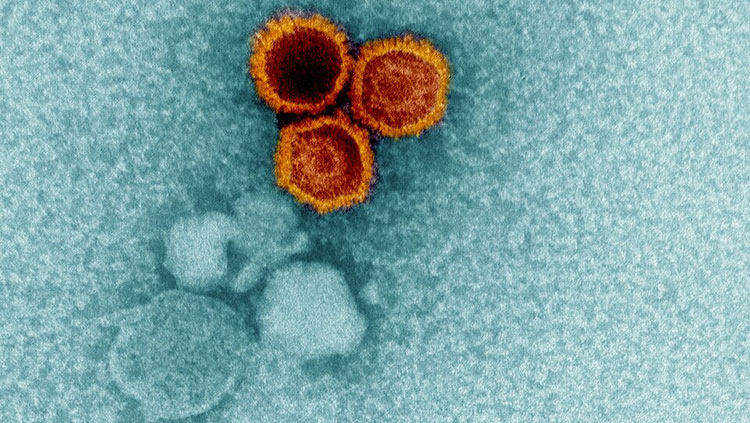
More than 90% of people worldwide have been infected with Epstein-Barr virus at some point in their lives. Primarily spread through saliva, EBV is part of the herpes family of viruses. It can cause mononucleosis and other illnesses, but in most cases, people never develop any notable symptoms. Although most have no lingering complications, EBV is a known trigger for multiple sclerosis (MS) among less than 1% of those who have had an infection. A new study published July 15 in Science Translational Medicine sheds crucial light on the cellular mechanism behind this connection.
An international team of researchers examined blood samples from people with untreated MS, people with an MS diagnosis who are receiving treatment, and people who don’t have the condition. They then exposed blood cells derived from the participants’ samples to parts of the Epstein-Barr virus. The team determined immune cells responsible for fueling inflammation — called CD4+ T cells — among people who had untreated MS were twice as reactive when exposed to active viral particles compared to those without the condition.
Big Picture: MS is an autoimmune disease in which the immune system attacks myelin, the fatty sheaths surrounding nerves. People with the condition typically develop muscle weakness as a result and can eventually encounter difficulty walking or speaking, although there are treatments available to considerably slow symptom progression. Experts say understanding the physiology underpinning the connection between EBV and MS could inform novel treatments or vaccines against the virus.
Read More: Biologists pinpoint how common virus triggers multiple sclerosis. Nature
More Top Stories
- Preliminary research indicates professional soccer players may experience long-term changes to their mental and brain health. CNN
- In clinical trials, an experimental Alzheimer’s drug reduced tau levels and modestly slowed cognitive decline. Science News
- Granule cells located in the brain’s olfactory bulb may be responsible for the phenomenon of certain smells triggering childhood memories. Scientific American
- New research, which has yet to be peer reviewed, suggests headbutting goats can experience neurodegeneration, which may make them useful models for studying head injuries. Science
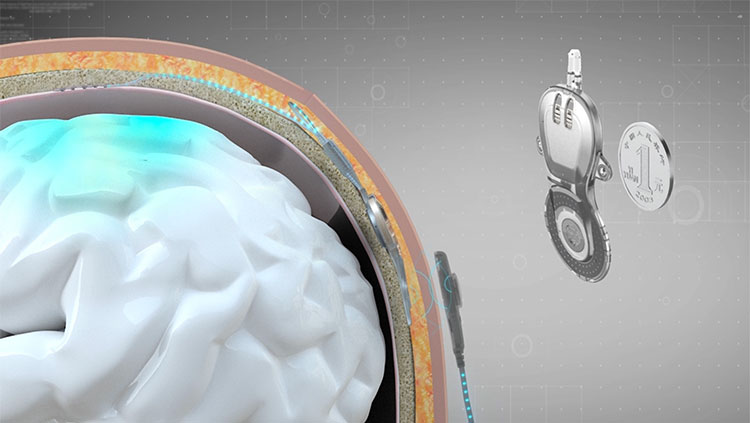
- A brain implant restored some movement and sensation for a person living with paralysis. STAT
- Humans are born with underdeveloped brains and require extensive care as babies, a phenomenon that may have started more than a million years ago and extended to ancient human species. Popular Science
- Monkeys have a basic understanding of geometry comparable to our own. The New York Times
- A first-of-its-kind implant designed to restore vision for people with advanced macular degeneration was approved for use in Europe. Futurism
About the Author
.jpg)
Bella is the Staff Writer and Editor for BrainFacts. She previously worked as a digital science reporter at PBS NewsHour, where she was named a fellow in the 2022-2023 class of the National Science-Health-Environment Reporting Fellowships (SHERF) and earned a 2021 D.C. Science Writers Association Newsbrief Award for writing. She graduated from the University of Michigan with a bachelor's degree in 2018.
CONTENT PROVIDED BY
BrainFacts/SfN